
*Why Bacon Makes Everything Taste Better (Hint: It's Really About the Fat)

Updated: Jul 11
Everything tastes better with bacon."
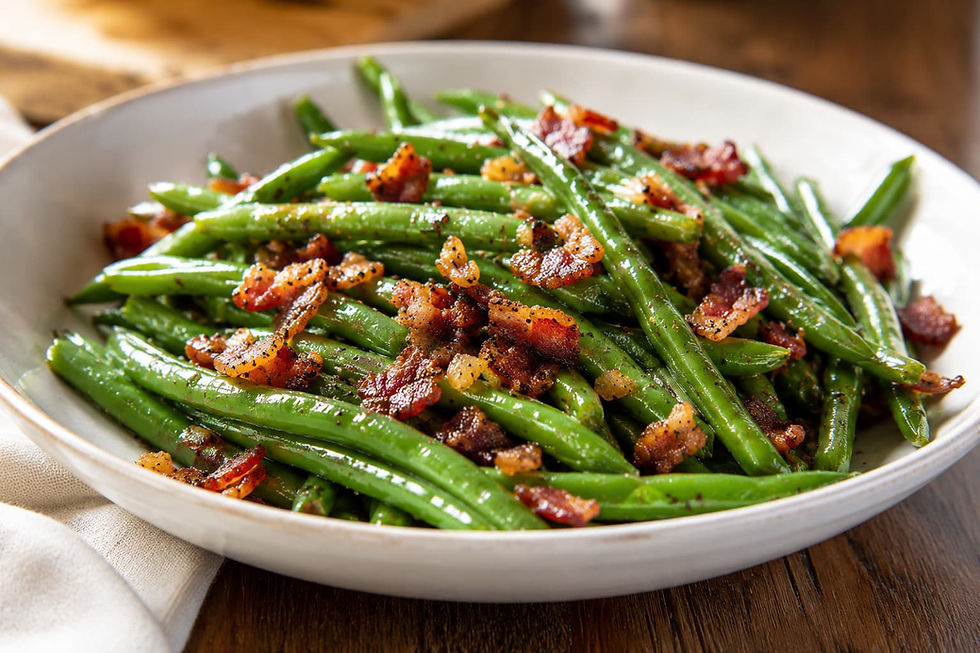
Few kitchen sayings have survived as long or been repeated as often.
A spoonful of bacon drippings turns a pot of green beans into comfort food. Roasted potatoes suddenly taste richer. Even a simple pan of cabbage seems to gain depth and character.
It is tempting to believe the explanation is simply that bacon tastes good.
But that is only part of the story.
The real lesson has surprisingly little to do with bacon itself. Bacon succeeds because it demonstrates one of the oldest and most important principles in cooking: Fat carries flavor.
Once you understand that idea, you'll begin looking at butter, olive oil, bacon drippings, duck fat, and other cooking fats in a completely different way. You'll also understand why blooming spices works so well and why experienced cooks almost always build flavor in fat before adding the rest of the ingredients. This is why bacon makes everything taste better!
Why Our Ancestors Saved Every Drop
Long before grocery stores offered rows of bottled cooking oils, every useful bit of rendered fat was considered too valuable to waste. In kitchens across Europe and North America, cooks understood through experience that cooking fats were more than a means of preventing food from sticking to the pan. They were an essential ingredient that added richness, carried flavor, and stretched precious food supplies.
After breakfast, bacon drippings were carefully strained through a fine sieve or cloth into a crock or tin kept near the stove. A spoonful might season a pot of beans, enrich a skillet of potatoes, or bring depth to cabbage, collard greens, cornbread, gravies, soups, and stews. Saving bacon fat was not simply an act of thrift. It was a practical way to make everyday meals more satisfying.
This practice was hardly unique. Throughout history, cooks relied on the fats most readily available in their region. French kitchens prized duck fat for roasting potatoes and preserving meats. Jewish cooks treasured schmaltz, rendered chicken fat, for vegetables, dumplings, and traditional dishes. Across the Mediterranean, olive oil became the foundation of countless recipes, while traditional British kitchens often relied on beef dripping for roasting and frying.
Although these fats each contribute their own distinctive flavor, they all perform the same remarkable task. They carry the aromatic compounds found in herbs, spices, and other ingredients, helping those flavors spread evenly throughout a dish.
Generations of cooks may not have understood the chemistry behind this process, but they certainly understood the results. They knew from experience that the right cooking fat could transform simple ingredients into meals that were richer, more aromatic, and far more memorable.
What Does It Mean to Carry Flavor?
Many of the compounds responsible for the aromas of herbs and spices dissolve much more easily in fat than they do in water.
When dried herbs or spices are gently warmed in butter, olive oil, or bacon fat, those aromatic compounds are released into the cooking fat. The fat then coats every ingredient in the pan, spreading those flavors evenly throughout the dish.
This is why sautéing onions before making soup creates more flavor than boiling raw onions in broth. It is why garlic becomes sweeter when gently cooked in olive oil. And it is exactly why blooming spices works so well. Instead of tasting isolated pockets of seasoning, every bite becomes balanced, aromatic, and complete.
Why Bacon Is Such an Effective Teacher and Why Bacon Makes Everything Taste Better
Bacon is more than a flavorful ingredient. It brings together several important elements of good cooking.
Rendered bacon fat coats food and carries aromatic compounds.
Salt heightens our perception of flavor.
Smoke adds another layer of aroma.
The cooking process creates hundreds of flavorful compounds through browning.
Natural umami deepens savory flavors already present in the dish.
Together, these elements make vegetables, beans, potatoes, and grains seem richer without hiding their natural flavors. The bacon is not simply adding its own taste. It is helping every other ingredient taste more like itself.
Not All Cooking Fats Tell the Same Story
Cooking Fat | Flavor Profile | Best With | Why It Works |
Butter | Rich, creamy, and slightly sweet | Eggs, mushrooms, asparagus, green beans, delicate herbs | Milk solids add richness while butter gently carries aromatic compounds from herbs and spices. |
Extra-Virgin Olive Oil | Fruity, peppery, and fresh | Tomatoes, garlic, Mediterranean vegetables, seafood, fresh herbs | Olive oil enhances herbal flavors and creates a bright, well-balanced finish. |
Bacon Fat | Smoky, savory, and deeply satisfying | Potatoes, green beans, onions, cabbage, corn, beans | Combines fat, smoke, salt, and umami to build layers of flavor while coating every ingredient. |
Duck Fat | Silky, rich, and luxurious | Roasted potatoes, carrots, parsnips, root vegetables | High in flavorful fat that promotes exceptional browning and crisp textures. |
Schmaltz (Rendered Chicken Fat) | Mild, savory, and comforting | Stuffing, roasted vegetables, poultry, matzo balls, soups | Adds gentle richness without overpowering more delicate ingredients. |
Why Blooming Spices Changes Everything
At Oak City Spice Blends, we often teach the Bloom Method because it helps cooks unlock more flavor from their seasonings.
Blooming simply means warming dried herbs and spices in a small amount of fat before adding the remaining ingredients.
About 30 seconds over medium heat is usually all it takes.
During those few seconds, the fat begins dissolving aromatic compounds from the herbs and spices, allowing them to spread evenly throughout the dish instead of remaining on the surface.
It is one of the simplest techniques a home cook can learn, yet it produces one of the biggest improvements in flavor.
A Common Mistake
One of the most common mistakes new cooks make is adding dried spices directly to simmering water, broth, or sauce. Water certainly extracts some flavors. But many of the most fragrant aromatic compounds dissolve far more effectively in fat.
Taking just thirty seconds to bloom your seasoning before adding liquid often produces noticeably richer, more rounded flavor. Sometimes the difference between a good meal and a memorable one is less than a minute.
Put It Into Practice
One of the easiest ways to experience this principle is with a simple skillet of green beans.
Instead of sprinkling seasoning over cooked vegetables, bloom Oak City Spice Blends Wilde Garlek in warm bacon fat for about 30 seconds before adding the beans.
The seasoning doesn't become stronger. It becomes better distributed. Every green bean is lightly coated with aromatic oils instead of simply carrying seasoning on the outside.
It is a small change that produces a remarkable difference.
Bloomed Bacon Green Beans with Wilde Garlek
A simple skillet of green beans becomes a lesson in flavor when bacon fat is treated as an ingredient rather than a byproduct.
Yield 4 servings - Prep Time 10 minutes - Cook Time 15 minutes - Total Time 25 minutes
Bloom Classification - Medium Bloom • Bacon Fat
Why the Bloom Works
Rendered bacon fat is rich in fat-soluble flavor compounds and carries the aromatic oils found in garlic, onion, chives, celery seed, and black pepper. Blooming Wilde Garlek in the warm bacon fat for about 30 seconds allows those aromas to dissolve into the fat before coating the green beans. The result is fuller flavor in every bite rather than seasoning sitting only on the surface.
Ingredients
1 pound fresh green beans, trimmed (454 g)
4 slices thick-cut bacon, diced (170 g)
2 teaspoons Oak City Spice Blends Wilde Garlek (6 g)
1 teaspoon olive oil, if needed (5 ml)
1 teaspoon fresh lemon juice (5 ml)
1 tablespoon chopped fresh parsley (4 g), optional
Method
Place the diced bacon in a large skillet over medium heat and cook for 8 to 10 minutes until crisp.
Remove the bacon with a slotted spoon, leaving about 1 tablespoon of bacon fat in the skillet. If necessary, add the olive oil.
Reduce the heat to medium-low.
Add the Wilde Garlek seasoning and stir continuously for about 30 seconds until fragrant.
Add the green beans and toss to coat every bean with the seasoned bacon fat.
Cook for 6 to 8 minutes, stirring occasionally, until the beans are bright green and crisp-tender.
Return the bacon to the skillet.
Stir in the lemon juice and cook for another 30 seconds.
Garnish with parsley, if desired, and serve immediately.
Best With
Grilled chicken
Roast turkey
Pork chops
Meatloaf
Ribeye steak
Holiday dinners
Weeknight suppers
Blooming Notes
The bacon fat should shimmer gently but never smoke.
Thirty seconds is usually enough to bloom the seasoning.
If the spices begin to darken, lower the heat immediately.
Blooming before adding the vegetables distributes flavor far more evenly than seasoning afterward.
Five Cooking Fats at a Glance
Fat | Flavor | Best For |
Butter | Rich | Eggs, mushrooms |
Olive Oil | Fruity | Tomatoes |
Bacon Fat | Smoky | Green beans |
Duck Fat | Luxurious | Potatoes |
Schmaltz | Savory | Poultry |
Try This Experiment
Prepare two skillets of green beans.
In the first skillet, cook the beans in bacon fat and sprinkle the seasoning on just before serving.
In the second skillet, bloom the Wilde Garlek in the bacon fat before adding the green beans.
Taste both versions side by side.
Notice how blooming produces a richer aroma, a smoother garlic flavor, and a more complete finish because the spices have dissolved into the cooking fat.
Storage Instructions
Store leftovers in an airtight container in the refrigerator for up to 3 days.
Leftover Tips
Use leftover green beans in:
Fried rice
Breakfast hash
Scrambled eggs
Roasted potato skillets
Vegetable soup
Variations
Mediterranean - Replace the bacon with extra-virgin olive oil and finish with Parmesan cheese.
Holiday Style - Add sautéed mushrooms and toasted slivered almonds.
Southern Style - Add diced onions while rendering the bacon and finish with toasted pecans.
The Spicekeeper's Principle
Bacon is not what makes this dish memorable. The real magic happens when bacon fat becomes a vehicle for flavor. By blooming your seasoning before adding the vegetables, you allow every bean to be coated with aromatic oils instead of simply dusted with spices.
Once you understand this technique, you'll begin seeing butter, olive oil, bacon fat, and other cooking fats as more than ingredients. They are tools.
And the better you understand those tools, the more confidently you can cook.
Further Reading
Recipes
The Spicekeeper's Notebook


Comments